Hip treatment

    Hip treatment, two pathways tailored to you.

    Our philosophy for hip pain: avoid surgery whenever possible, operate in a muscle-sparing way when needed.

    Where are you located?

    Choose your location so we can show you the right pathway.

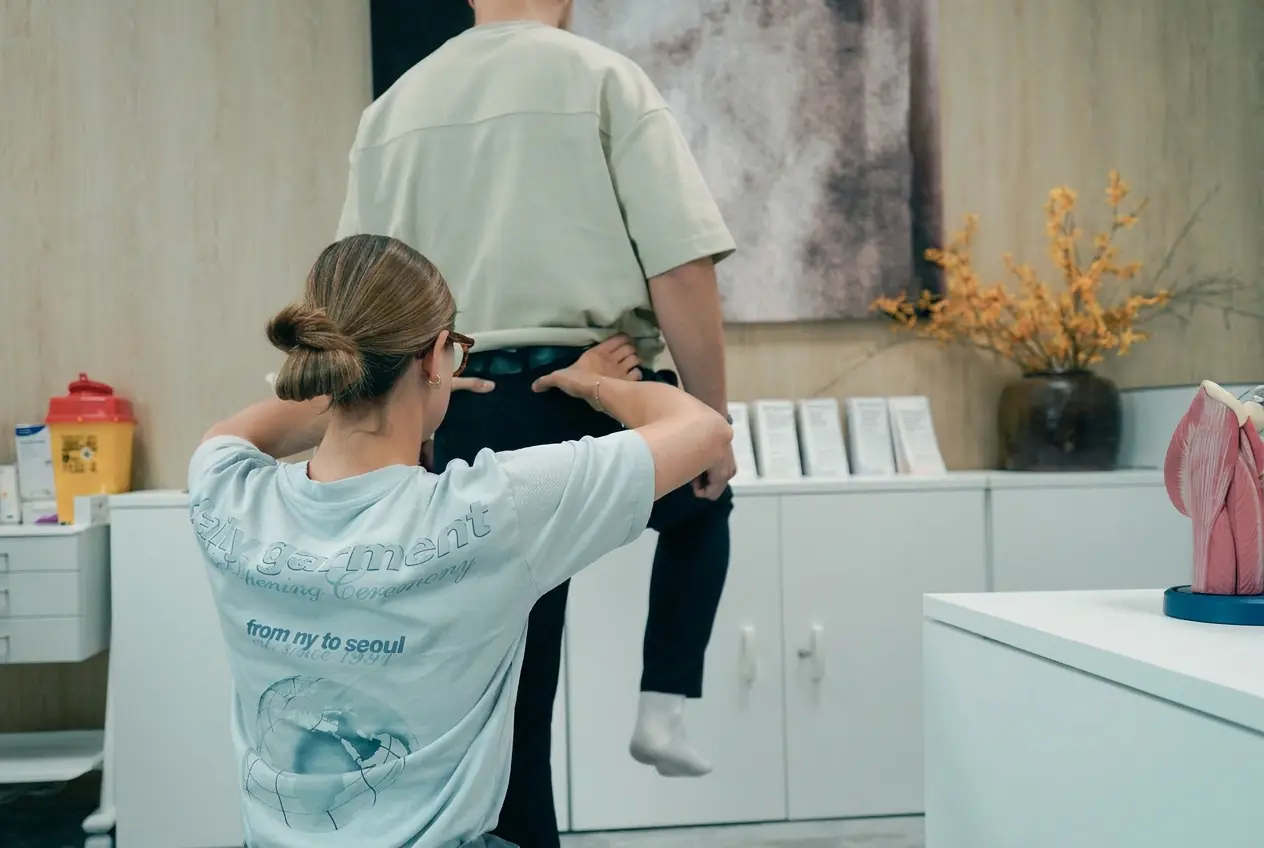
    Rehabilitation & exercise therapy
    Non-surgical pathway

    Rehabilitation & exercise therapy

    12-16 weeks of targeted rehabilitation led by a Hip Coach. Strength training, movement control and activity management.

    • Personal exercise programme
    • Guidance via the HipCloud app
    • Evaluation every 2-3 months
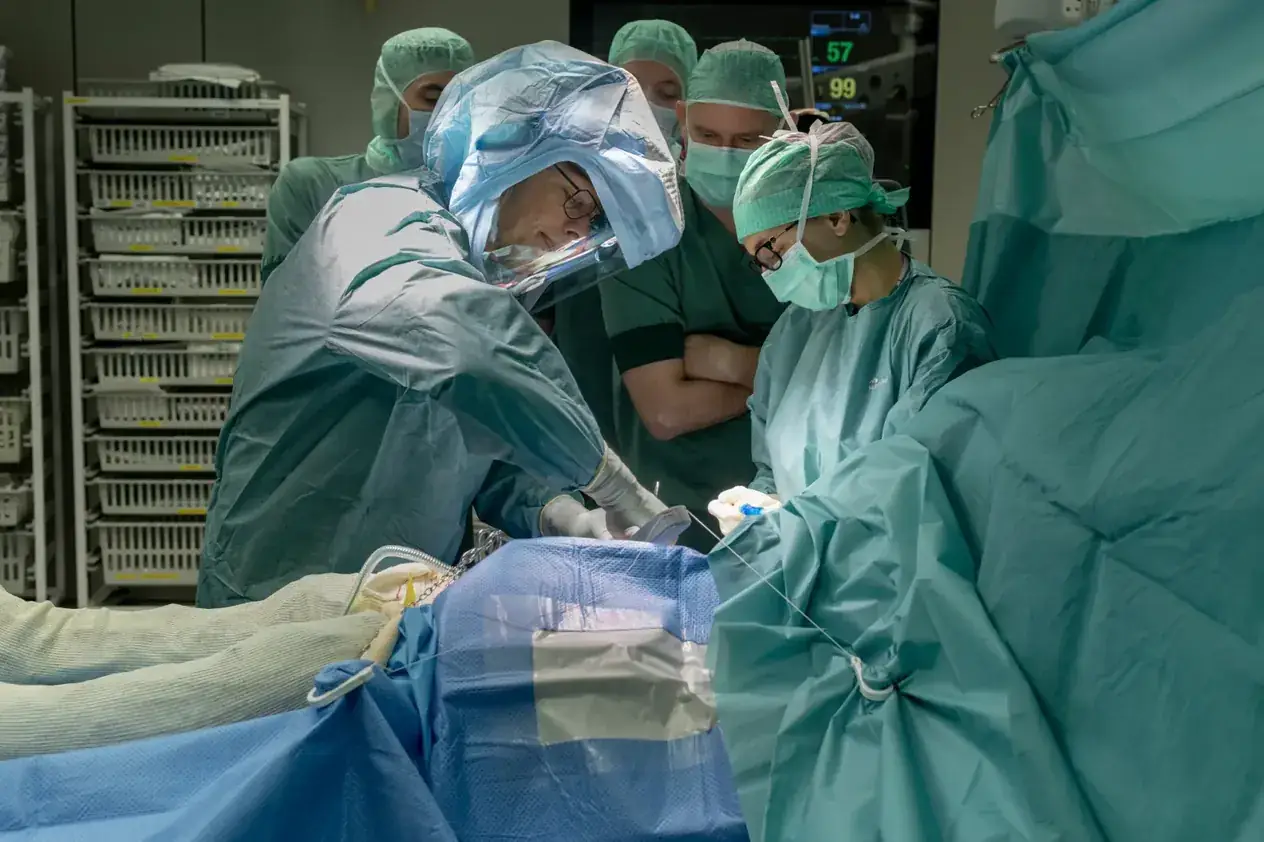
    Muscle-sparing hip surgery
    Surgical pathway

    Muscle-sparing hip surgery

    EDA total hip replacement, arthroscopic labral repair or PAO for dysplasia. Always as minimally invasive as possible, with technique tailored to your condition.

    • One-Day-Hip for total hip replacement
    • Muscle-sparing techniques
    • Fast functional recovery
    Specific procedures

    Our surgical procedures

    An overview of the specific surgical procedures we perform, from minimally invasive arthroscopy to peri-acetabular osteotomy and hip replacement.

    Corrective procedures

    Extra-articular impingement resection (EAI)

    After hip arthroplasty, mechanical impingement can sometimes occur between the pelvic rim and the greater trochanter (side of the upper leg). This surgery removes a small part of the greater trochanter so that there is no longer any mechanical impingement during deep hip flexion.

    Discover Extra-articular impingement resection (EAI)

    Heterotopic Ossification Resection (HO)

    After hip arthroplasty, heterotopic ossification (HO) can sometimes occur. This is a calcification between the muscles. It causes pain and can lead to mechanical restriction during deep flexion movements of the hip.

    Discover Heterotopic Ossification Resection (HO)

    Removal of osteosynthesis material (ROM)

    If you have previously undergone surgery, osteosynthesis material, such as screws or a nail, may still be present. This could be after a PAO or a relative lengthening of the femoral neck, for example. Sometimes these screws or nail can cause discomfort. In such cases, the material can be removed.

    Discover Removal of osteosynthesis material (ROM)

    Relative Lengthening of the Femoral Neck

    In some patients, often after Legg-Calvé-Perthes disease, the outer part of the femur (the greater trochanter) is positioned too high relative to the femoral head. This results in the hip muscles having too small a lever arm, and the load on the hip joint is not optimal. A relative lengthening of the femoral neck restores the hip's biomechanics.

    Discover Relative Lengthening of the Femoral Neck
    Technique comparison

    EDA versus classical approach for total hip replacement

    For a total hip replacement, the surgical approach makes a major difference for recovery and function. EHC applies the muscle-sparing EDA technique (Extended Direct Anterior) within the One-Day-Hip protocol.

    EDA versus classical approach for total hip replacement
    AspectEDA (muscle-sparing)Classical approach
    Access routeBetween the muscles, without cutting through them.Lateral or posterior, with detachment or incision of muscles.
    Muscle damageNo cutting of gluteal muscles or hip abductors.Muscles are detached or cut and need to heal.
    Hospital stayOften same-day discharge (One-Day-Hip).Typically 2 to 4 days of hospitalisation.
    Recovery timeLight activities within 2 weeks, sport build-up from 6 to 12 weeks.Light activities after 4 to 6 weeks, sport only after 3 months or later.
    Movement restrictionsNo specific posture restrictions after recovery.Temporary posture restrictions to prevent dislocation.
    Dislocation riskLow thanks to preserved muscle balance.Slightly higher, especially in the first months.